By the early 1930s, much of the Coeur d’Alene River was effectively lifeless. Fish had disappeared, plankton was dying, and long stretches of the river showed little sign of recovery. In 1933, federal scientists confirmed that mine-contaminated water was deadly to aquatic life—but their most alarming discovery came when they looked beyond the water itself, to what remained behind.
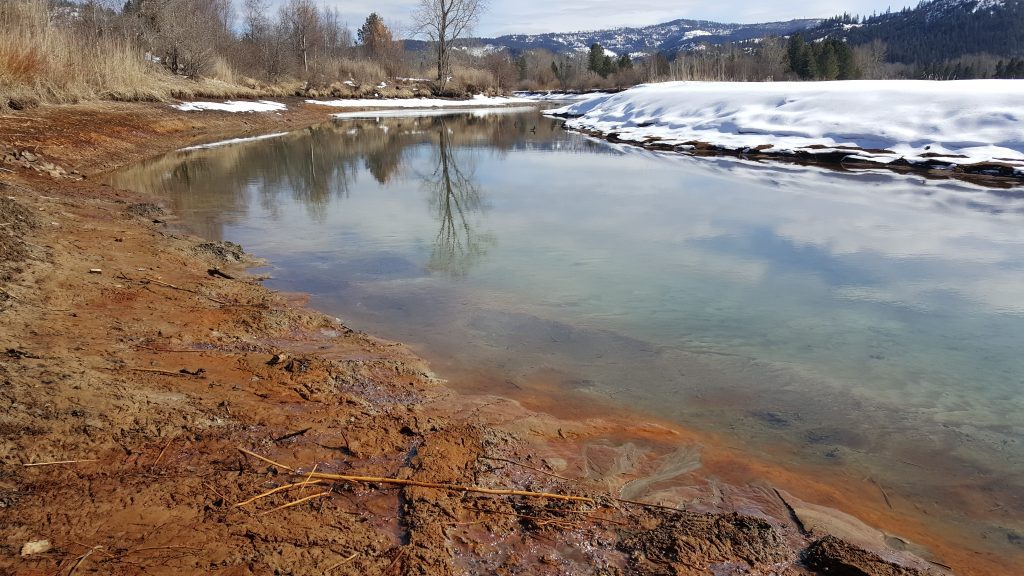
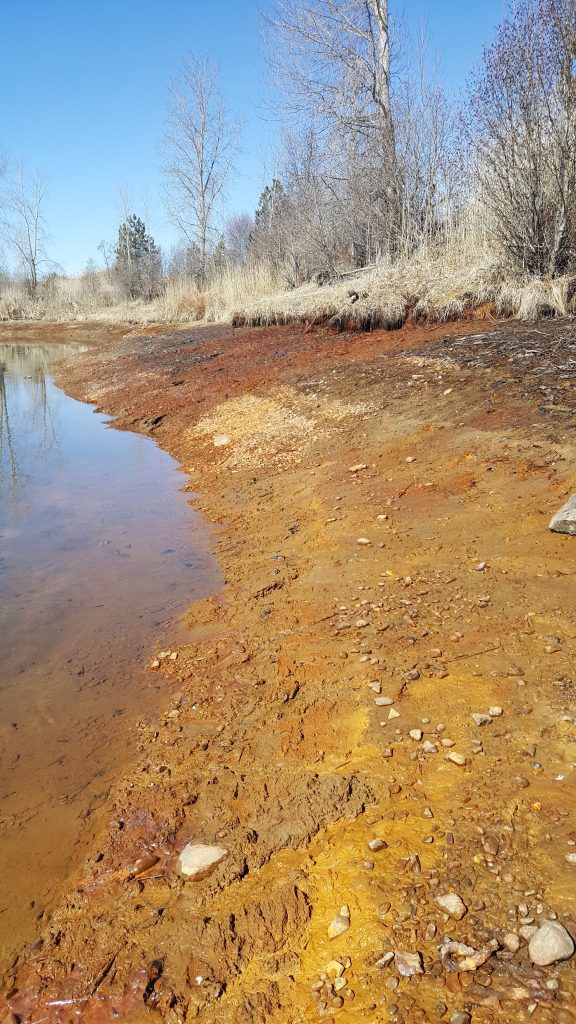
The greatest danger lay in the hard mineral build up that formed on mine wastes exposed to moisture, light, heat, and oxidation. Samples collected from Smelterville Flats and Thompson Flats were chemically distinct from other waste materials and quickly identified as highly toxic.
Goldfish were used extensively in these experiments due to their resilience, despite not being native to the watershed. Even very small amounts (0.01%) of the Thompson Flats material caused fish to release large amounts of slime. At higher concentrations (0.18%), fish became weak, lost control of their movements, and could no longer swallow. Prolonged exposure resulted in black lead deposits forming in the fins, followed by death.
In lower-concentration tests where the material was allowed to settle, mucous production subsided and fish often recovered within days. This pattern revealed a critical mechanism: when disturbed or suspended—such as during floods—the material became deadly.
Further testing across multiple species showed that zinc caused fast, immediate harm, while lead caused damage that built up over time. Even when polluted water was heavily diluted—just one part contamination mixed into 100,000 parts clean water—it stopped digestion in fish, frogs, and turtles, permanently altered heart function, and killed all plankton within 24 hours. Comparative studies showed incrustations from Smelterville Flats to be even more toxic than those from Thompson Flats.
Based on this evidence, Ellis concluded that mine wastes discharged into the South Fork in the Wallace–Kellogg area had rendered more than 50 miles of the South Fork and main Coeur d’Alene River effectively barren—devoid of fish, plankton, and aquatic food sources. He warned that massive deposits of toxic materials along riverbanks and floodplains would continue to poison the river and threaten downstream waters, including Lake Coeur d’Alene itself. Even if discharges ceased, recovery would take time.
Ellis did not call for an end to mining. Instead, he concluded that the only way to prevent pollution-related harm to fisheries was to keep all mine waste out of the Coeur d’Alene River. He pointed to successful waste-management systems in Kimberly, British Columbia, where tailings were routed to settling basins before treated water was released. Similar systems were being tested at the Bunker Hill and Page Mines but were not widely adopted. The Mine Owners Association instead installed a suction dredge at Mission Flats—an approach Ellis acknowledged would reduce, but not eliminate, pollution.
Direct discharge of mine waste into the river finally ended in 1968 with federally mandated water quality regulations and widespread use of settling ponds. Despite these improvements, historic mining left a lasting legacy. Tailings still line riverbanks and floodplains, forming layers several feet deep that resemble sandy beaches but contain contaminated sediments.
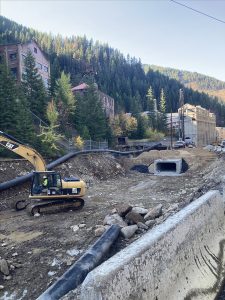
Today, elevated blood lead levels in children and ongoing waterfowl mortality continue to be linked to these deposits. Remediation remains complex, particularly in flood-prone areas where recontamination is possible. Nevertheless, progress continues. Recent efforts include remediation of approximately 700 acres at Gray’s Meadow near Black Lake, converting contaminated land into managed functional wetlands. Upcoming projects include pilot river treatments along the Dudley Reach and restoration of the Gleason wetlands.
Until cleanup is complete, residents and visitors are urged to exercise caution when recreating in affected areas. More information about ongoing remediation and public safety is available at cdabasin.idaho.gov.
 Official Government Website