Water quality can be measured in many ways. Some tests involve collecting water samples and analyzing them in a laboratory to determine whether the water is safe for human consumption. Other tests evaluate conditions that affect fish and other aquatic species. While these methods provide valuable information, scientists can also assess the health of a waterbody by examining the organisms that live within it.
Aquatic ecosystems are supported by a complex food web that begins with small organisms. Some, such as zooplankton, are microscopic and difficult to see with the naked eye. Others are larger and more visible. These aquatic “bugs,” known as macroinvertebrates, live among rocks, vegetation, and sediments in streams, rivers, and lakes. Their presence can tell an important story about the health of a waterbody and the life it can support.
Macroinvertebrates are small animals without backbones and include aquatic insects, crustaceans, worms, and snails. They form the foundation of aquatic food webs and serve as an important food source for fish, amphibians, and birds. Because many macroinvertebrates spend months or even years in the same area and cannot easily escape pollution, they are widely used as indicators of water quality.
Some species, such as stoneflies, mayflies, and caddisflies, are highly sensitive to pollution and require cool, clean, oxygen-rich water to survive. Other organisms, including aquatic worms, midge larvae, and some leech species, are more tolerant of pollution and lower oxygen levels. By identifying which macroinvertebrates are present, scientists can develop a biological assessment of stream health and detect potential water quality problems.
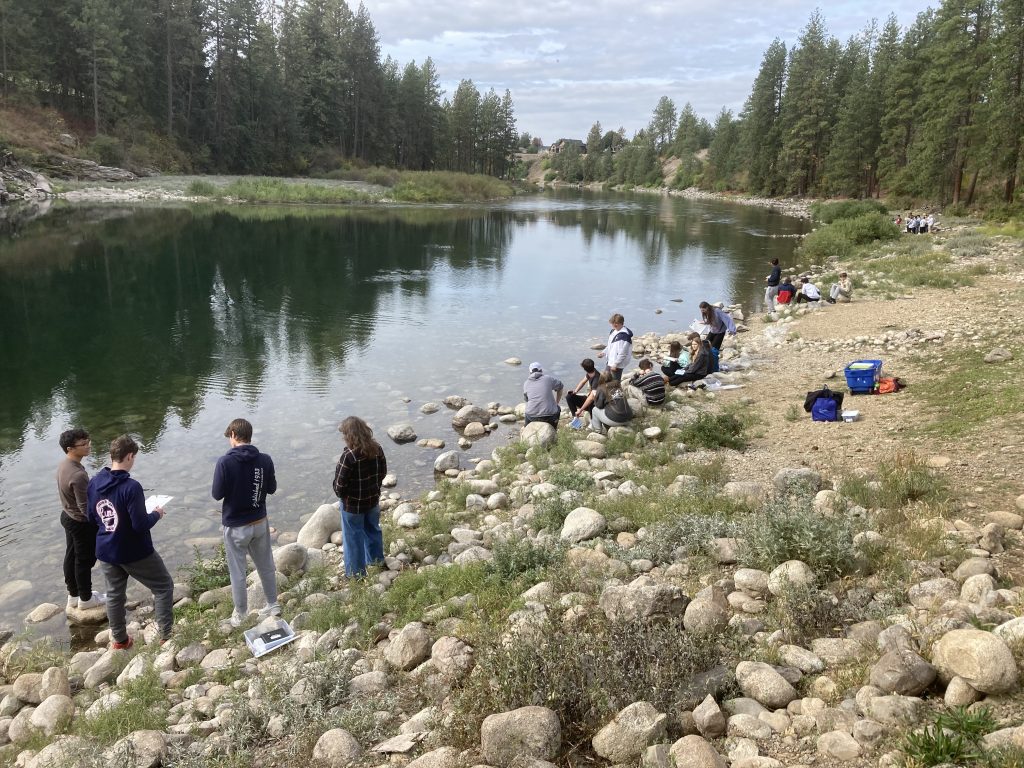
During The Confluence Project’s water quality field trips, students often collect and identify macroinvertebrates to help assess watershed health. Wearing waders or muck boots, participants use a kick net to sample rocks and vegetation in the stream. The collected organisms are then placed in a bucket of water, allowing sediment to settle and the tiny creatures to become visible. Using a plastic spoon or pipette, students carefully transfer the organisms to a magnifier for identification.
Once the macroinvertebrates have been identified, students can calculate a biotic index, which provides a general indication of water quality. Finding pollution-sensitive species, such as stoneflies, mayflies, and caddisflies, often suggests a healthy aquatic ecosystem. In contrast, a community dominated by more pollution-tolerant organisms may indicate environmental stress or degraded water quality.
Scientists continue to use macroinvertebrate monitoring today because it provides valuable information about water quality over time. While a single water sample offers a snapshot of conditions at a specific moment, macroinvertebrates reflect the cumulative effects of water quality on aquatic life over weeks, months, or even years. By combining biological monitoring with traditional water chemistry data, researchers can gain a more complete understanding of ecosystem health.
For example, during the past year, the U.S. Fish and Wildlife Service conducted macroinvertebrate sampling near the Central Impoundment Area to evaluate how upgrades to the Central Treatment Plant may be affecting aquatic life in the South Fork Coeur d’Alene River. The macroinvertebrate data, combined with seasonal water-quality sampling, help scientists assess not only changes in water chemistry but also how those changes are influencing the organisms that live in the river. Together, these monitoring efforts provide a more comprehensive picture of the effectiveness of the remedy and its impact on overall water quality.
These tiny creatures may not look impressive at first glance, but they play a critical role in aquatic ecosystems and provide valuable clues about the health of our waterways.
The Dirt is a series of informative articles focused on all aspects of cleanup efforts associated with the Bunker Hill Superfund Site. Our goal is to promote community awareness of contamination issues, to provide tools for protecting public health, and to keep the community informed of current and future cleanup projects. The Dirt is a group of committed and local experts from multiple agencies, including the Basin Environmental Improvement Project Commission, Panhandle Health District, Shoshone County, Silver Valley Economic Development Corporation and the Idaho Department of Environmental Quality.