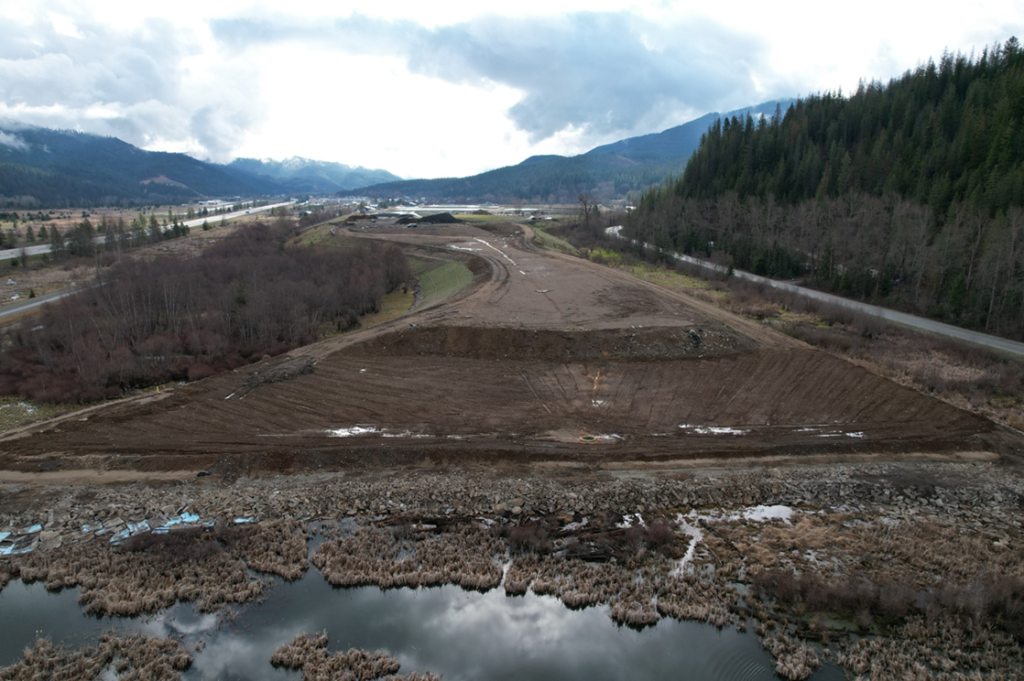
If you’ve driven past the Page Repository recently, you’ve probably noticed a large stockpile of concrete and wondered what’s going on. Why is so much concrete being brought to the repository? Why is it being placed in what appears to be a wetland? And how does it fit into the environmental cleanup of the Coeur d’Alene Basin?
The answer starts with understanding what the Page Repository is—and what it isn’t.
The Page Repository is not a municipal landfill. It is a specially engineered disposal facility built as part of the Bunker Hill Superfund cleanup to safely contain contaminated soil and mine waste generated by cleanup projects throughout the Box. EPA envisioned the repository in its 1992 Operable Unit 2 Record of Decision as a permanent location where contaminated materials could be consolidated, isolated, and eventually capped to protect human health and the environment. The repository currently accepts waste from remedial actions, the Institutional Controls Program, Roads Program, and Basin Property Remediation Program. Page Repository is designed and operated by IDEQ. It allows those in the Box to have a place to put their contaminated soil making it vitally important for the community.
One feature many people don’t realize is that the repository was designed to use clean, durable construction materials as part of its engineered foundation. Rather than purchasing thousands of cubic yards of quarry rock, engineers can use concrete from construction projects if it meets engineering specifications.
Think of it like building a house. Before you pour the floor or build the walls, you first need a solid foundation. At Page, the concrete isn’t waste being buried. Instead, it forms the structural base that supports future layers of contaminated soil while providing long-term stability for heavy equipment and decades of repository use.
Engineers designed the repository so only about five feet of contaminated material can be added each construction season. This controlled loading allows the underlying materials time to settle before additional weight is placed on top. Adding too much weight too quickly could affect long-term stability, so construction occurs in carefully planned stages. Engineers monitor the repository throughout construction and placement of waste for geotechnical stability.
The repository was originally designed to receive roughly 15,000 cubic yards of contaminated material each year, but recent cleanup projects are generating closer to 30,000 cubic yards annually. Preparing additional foundation now helps ensure the repository can safely accommodate those higher volumes.
Some people have wondered why the current concrete stockpile appears so much larger than in the past. Higher volumes of contaminated soil require additional repository capacity, and engineers are constructing the foundation for Cell 6 exactly as called for in the approved design. In addition, the west end of the swamp is deeper requiring more material for the foundation construction. Similar work has occurred during previous repository expansions, but recent work on I-90 has provided much of the concrete needed for expansion. Reusing concrete makes good financial sense. Instead of paying to dispose of clean concrete in a landfill, the material can be beneficially reused in the repository. In addition, the Idaho Department of Environmental Quality (DEQ), does not have to pay for purchasing materials for the foundation. If suitable concrete and rock weren’t available from local construction projects, they would have to purchase and haul rock from commercial quarries. At an estimated cost of about $50 per cubic yard before transportation, buying all of that material could cost more than $7.5 million.
They are currently stockpiling the concrete at Page to build out Cell 6. Later in the season contractors will remove reinforcing steel and process the concrete, so the pieces meet design specifications. Pieces that are too small create excess fine material, while larger pieces do not compact properly. Every source is reviewed by DEQ, the repository operator, and the Engineer of Record before it becomes part of the repository.
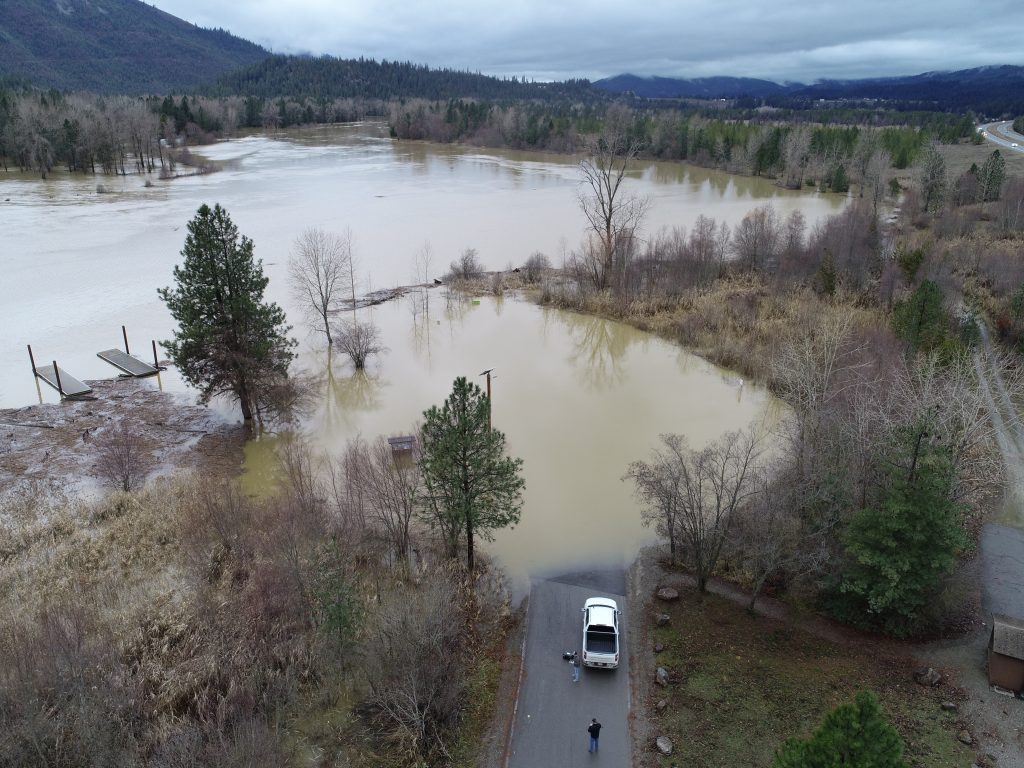
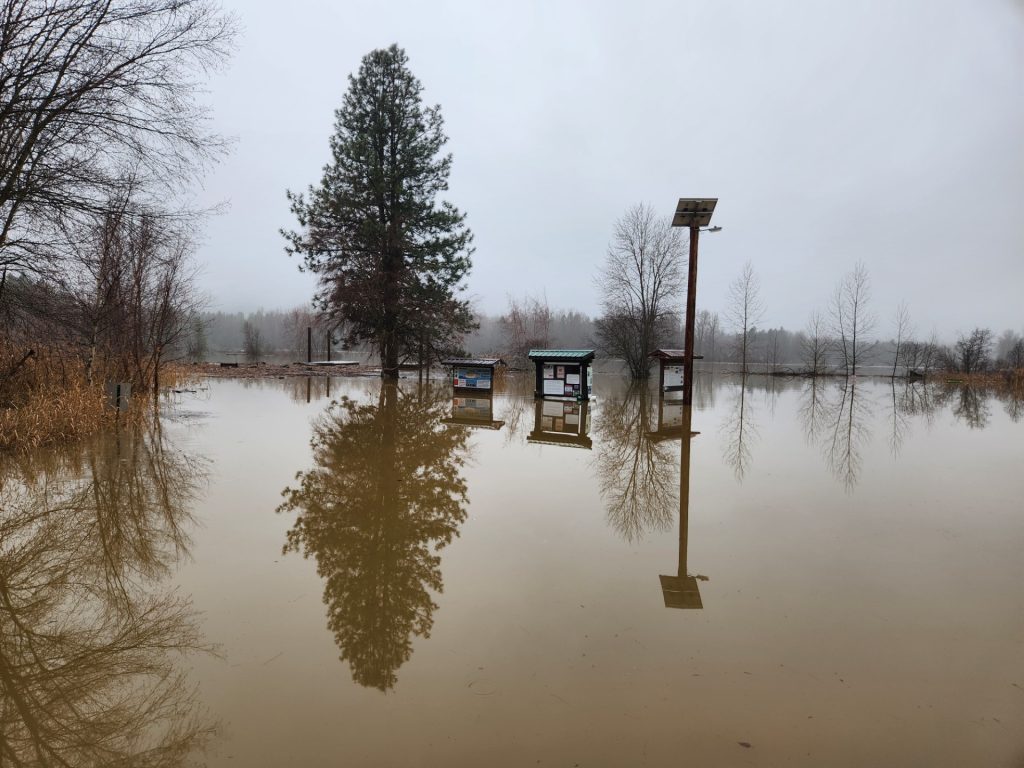
The current work taking place in Cell 6 is deeper than in previous expansion areas. Because of these softer underlying conditions, engineers designed Cell 6 with additional foundation material to provide the necessary support while maintaining the finished repository at least one foot above the 100-year flood elevation. Once this foundation work is complete, no further foundation expansion is planned.
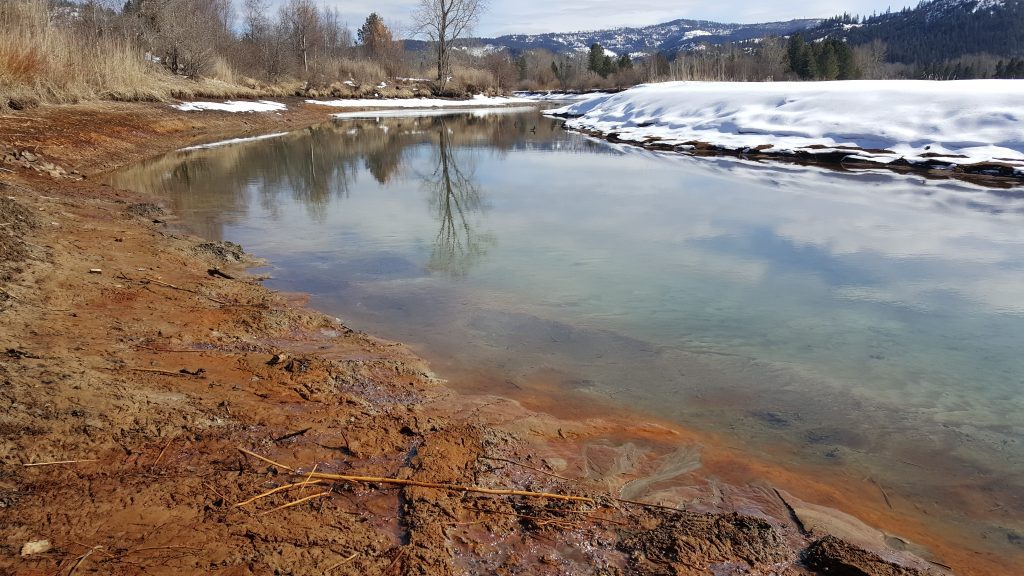
Large pieces of concrete have been incorporated into the repository since its early expansions. Water-quality monitoring has not shown adverse impacts associated with this practice. As planning begins for the repository’s next expansion, additional water-quality testing will help guide future design decisions.
In our next article, we’ll explore why the repository is located where it is, how a former tailings pond became a regulated wetland, and why managing water at the site has always been one of the keys to protecting water quality throughout the Basin.
• • •
The Dirt is a series of informative articles focused on all aspects of cleanup efforts associated with the Bunker Hill Superfund Site. Our goal is to promote community awareness of contamination issues, to provide tools for protecting public health, and to keep the community informed of current and future cleanup projects. The Dirt is a group of committed and local experts from multiple agencies, including the Basin Environmental Improvement Project Commission, Panhandle Health District, Shoshone County, Silver Valley Economic Development Corporation, and the Idaho Department of Environmental Quality.