Category: Uncategorized
THE DIRT: How Flooding in the Bunker Hill Superfund Site is Different

While flooding in North Idaho is not uncommon, high flow events like the one that occurred in December 2025 can have consequences that extend beyond immediate water damage. When high flows sweep through the Coeur d’Alene River Basin, they interact with a landscape shaped by more than a century of mining activity. Historic discharges mean that floodwaters have the potential to move metals and other pollutants downstream, affecting both the environment and the communities that live along these waterways.
Flood damage usually brings to mind washed-out roads, detours, and debris—but when floods hit contaminated waterways like those in the Coeur d’Alene River Basin, the risks go far beyond the obvious. From 1884 until 1968, Silver Valley mines directly discharged millions of tons of metals contaminated mine waste into the South Fork of the Coeur d’Alene River and its tributaries. These wastes traveled downstream into the main channel of the Coeur d’Alene River and chain lakes of the Lower Basin, leaving a devastated landscape behind. The waters of the South Fork and main stem of the Coeur d’Alene River ran milky gray, the vegetation lining the banks died off, and wildlife abandoned the area. The magnitude and duration of historic practices left a vast legacy of contaminated sediment throughout the river corridor and its connected aquatic and floodplain habitats.
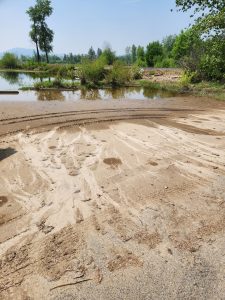
The increased volume and speed of water traveling downstream during flood events can greatly disturb these historic sediments, dislodging them from the riverbed and banks, carrying them downstream and into the nearby low-lying lands. As weather conditions improve, floodwaters begin to recede, and the process of deposition begins. Deposition is a normal process that occurs as floodwaters lose their velocity and begin to subside. The sediments begin to settle out and remain on the surface of the land after the waters return to normal levels in the river. When this occurs within contaminated areas, contaminated sediments can be left behind.
As the years passed with no direct discharges of mine waste to the river and remediation began throughout the Coeur d’Alene River Basin, the land showed signs of recovery. The waters of the Coeur d’Alene River no longer ran milky gray with mine waste, the floodplain became revegetated, and wildlife began returning to the area. River and lake front properties in the Lower Basin no longer looked polluted and people began to view the land as prime recreational real estate. Unfortunately, these properties are still contaminated, and continue to pose a risk to human health, wildlife, and the environment.
When properties along the river and portions of the chain lakes are developed for recreational or residential use, owners are required under Panhandle Health District’s Institutional Controls Program to install clean barriers anywhere contaminated land is being developed, actively used, and/or maintained. Clean surfaces such as gravel, topsoil, asphalt, or concrete, when installed properly, help protect those using the land from exposure to metals such as lead, arsenic, and cadmium, and these clean barriers have been proven to reduce exposure to these metals. However, when floodwaters inundate remediated areas, barriers can be compromised in several ways: gravel may erode or become mixed with contaminated sediments, concrete or asphalt can crack or heave, and vegetated or “greened” areas can be buried under a thin layer of contaminated silt that is not always visible at the surface. Over time, these conditions can reduce the effectiveness of the barrier. It is the property owner’s responsibility to protect and maintain their barriers, which can be a costly expense.
Flooding can undo years of remediation, leaving contaminated sediments on properties and compromising protective barriers. Property owners along the Coeur d’Alene River and chain lakes should inspect and maintain clean surfaces after every flood and contact the Panhandle Health District (PHD) for guidance to keep their land safe from lead, arsenic, and cadmium exposure.
The Dirt is a series of informative articles focused on all aspects of cleanup efforts associated with the Bunker Hill Superfund Site. Our goal is to promote community awareness of contamination issues, to provide tools for protecting public health, and to keep the community informed of current and future cleanup projects. The Dirt is a group of committed and local experts from multiple agencies including the Basin Environmental Improvement Project Commission, Panhandle Health District, Shoshone County, Silver Valley Economic Development Corporation, and the Idaho Department of Environmental Quality.
THE DIRT: December Flooding on the Coeur d’Alene River: An Unusual Early-Season Event
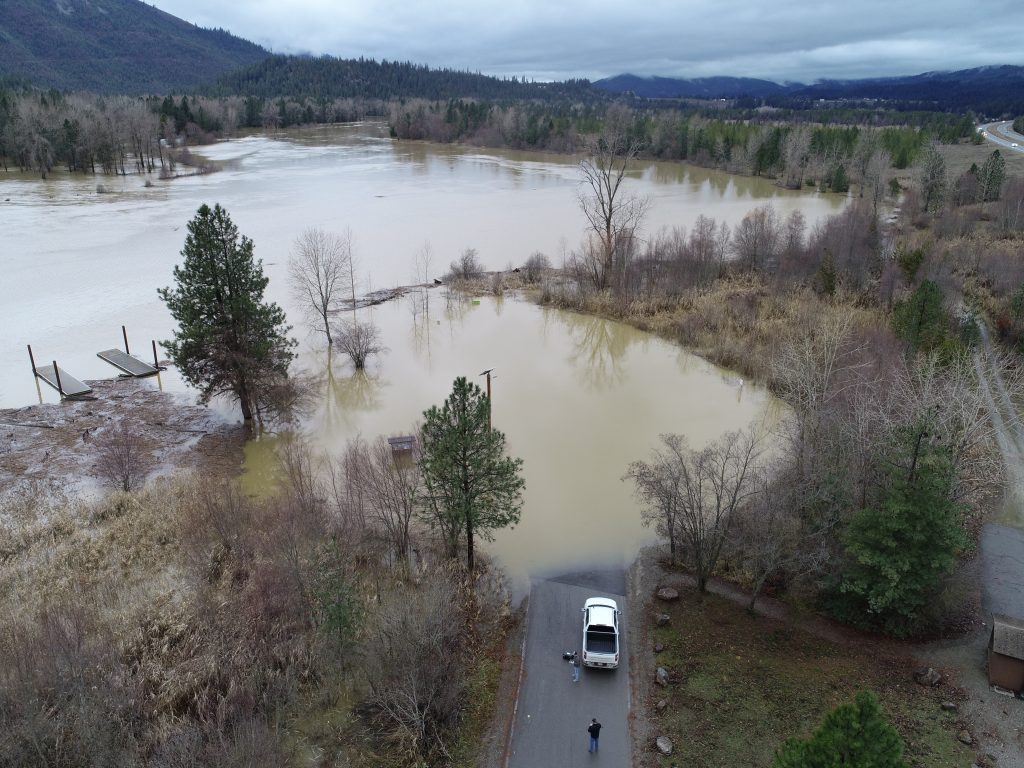
The flood event that struck the Coeur d’Alene River Basin around December 11, 2025, was unusual—not because flooding itself is rare in North Idaho, but because of when and how it occurred.
December 2025 brought historically high air temperatures and was the second wettest December on record across most SNOTEL sites in the Basin. A SNOTEL site is an automated remote station that measures snowpack, precipitation, and temperature to track water supply conditions, especially in mountain watersheds. While rain-on-snow events are fairly common in the Coeur d’Alene River watershed, this one stood out due to its sheer magnitude and geographic reach. Rain fell across nearly all elevation bands, including the highest elevations that typically remain cold enough to store snow well into winter. Under normal conditions, rain at lower elevations might trigger some snowmelt, but this event caused widespread melt across the Basin.
In terms of historical context, the December 2025 flood ranked 28th in daily median stream volume for the Coeur d’Alene River. While it did not surpass the largest floods on record—such as the historic January 1974 flood or the February 1996 event—it was notable for occurring much earlier than typical high-flow events. The largest floods in the Basin have historically taken place in January or February, with most high flows occurring during the April–May runoff season. December floods exceeding median streamflow are relatively rare, making this event an outlier.
Several factors combined to rapidly push water into rivers and streams. Warmer-than-normal conditions in November, followed by a record-warm December, produced an unusually dense snowpack across the Basin. Dense, warm snow is less capable of absorbing rain than colder, lighter snow. Near-normal precipitation in October and early December rain at lower elevations also left soils saturated. When soil is already wet, it cannot absorb much additional water, effectively fast-tracking runoff directly into creeks, rivers, and lakes. Together, above-normal temperatures, dense snowpack, and saturated soils created what hydrologists describe as a “perfect storm” for flooding.
Tributaries played a role as well. While limited snowpack monitoring exists in the headwaters of Prichard Creek and Beaver Creek, it is reasonable to assume they experienced similar melt conditions. The North Fork of the Coeur d’Alene River near Prichard reached record-high flows for the month of December, underscoring how widespread the event was.
Looking ahead, climate trends suggest December-season flooding could become more common. Although overall snowpack in the western United States is declining, warmer temperatures mean that the snow that does accumulate is often denser and more prone to rapid melt during rain events. Many studies indicate an increasing likelihood of rain-on-snow events—conditions that elevate flood risk even outside the traditional runoff season.
The Dirt is a series of informative articles focused on all aspects of cleanup efforts associated with the Bunker Hill Superfund Site. Our goal is to promote community awareness of contamination issues, to provide tools for protecting public health, and to keep the community informed of current and future cleanup projects. The Dirt is a group of committed and local experts from multiple agencies including the Basin Environmental Improvement Project Commission, Panhandle Health District, Shoshone County, Silver Valley Economic Development Corporation, and the Idaho Department of Environmental Quality.
THE DIRT: Historic pollution study of the Coeur d’Alene Basin Pt.4
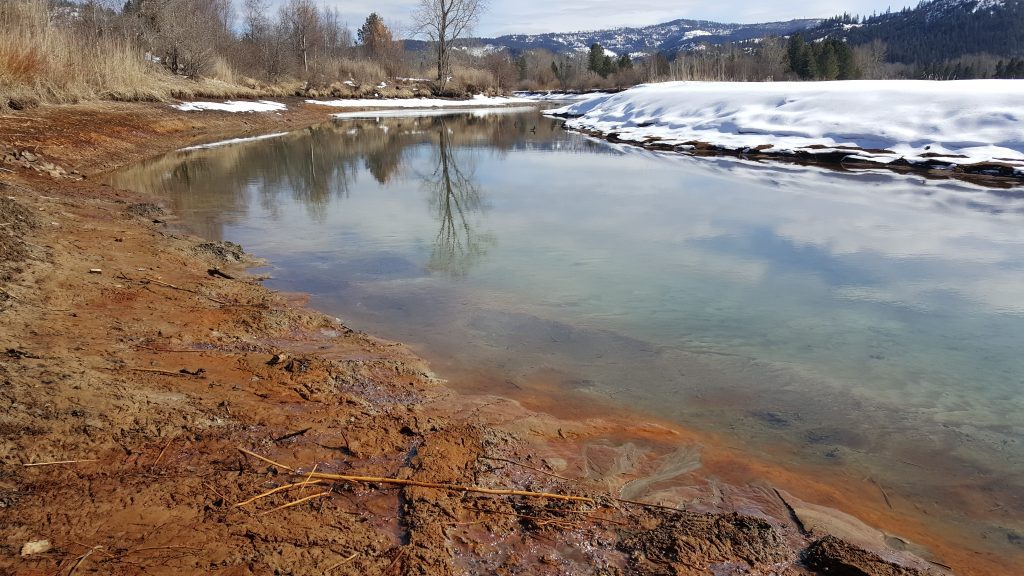
By the early 1930s, much of the Coeur d’Alene River was effectively lifeless. Fish had disappeared, plankton was dying, and long stretches of the river showed little sign of recovery. In 1933, federal scientists confirmed that mine-contaminated water was deadly to aquatic life—but their most alarming discovery came when they looked beyond the water itself, to what remained behind.
The greatest danger lay in the hard mineral build up that formed on mine wastes exposed to moisture, light, heat, and oxidation. Samples collected from Smelterville Flats and Thompson Flats were chemically distinct from other waste materials and quickly identified as highly toxic.
Goldfish were used extensively in these experiments due to their resilience, despite not being native to the watershed. Even very small amounts (0.01%) of the Thompson Flats material caused fish to release large amounts of slime. At higher concentrations (0.18%), fish became weak, lost control of their movements, and could no longer swallow. Prolonged exposure resulted in black lead deposits forming in the fins, followed by death.
In lower-concentration tests where the material was allowed to settle, mucous production subsided and fish often recovered within days. This pattern revealed a critical mechanism: when disturbed or suspended—such as during floods—the material became deadly.
Further testing across multiple species showed that zinc caused fast, immediate harm, while lead caused damage that built up over time. Even when polluted water was heavily diluted—just one part contamination mixed into 100,000 parts clean water—it stopped digestion in fish, frogs, and turtles, permanently altered heart function, and killed all plankton within 24 hours. Comparative studies showed incrustations from Smelterville Flats to be even more toxic than those from Thompson Flats.
Based on this evidence, Ellis concluded that mine wastes discharged into the South Fork in the Wallace–Kellogg area had rendered more than 50 miles of the South Fork and main Coeur d’Alene River effectively barren—devoid of fish, plankton, and aquatic food sources. He warned that massive deposits of toxic materials along riverbanks and floodplains would continue to poison the river and threaten downstream waters, including Lake Coeur d’Alene itself. Even if discharges ceased, recovery would take time.
Ellis did not call for an end to mining. Instead, he concluded that the only way to prevent pollution-related harm to fisheries was to keep all mine waste out of the Coeur d’Alene River. He pointed to successful waste-management systems in Kimberly, British Columbia, where tailings were routed to settling basins before treated water was released. Similar systems were being tested at the Bunker Hill and Page Mines but were not widely adopted. The Mine Owners Association instead installed a suction dredge at Mission Flats—an approach Ellis acknowledged would reduce, but not eliminate, pollution.
Direct discharge of mine waste into the river finally ended in 1968 with federally mandated water quality regulations and widespread use of settling ponds. Despite these improvements, historic mining left a lasting legacy. Tailings still line riverbanks and floodplains, forming layers several feet deep that resemble sandy beaches but contain contaminated sediments.
Today, elevated blood lead levels in children and ongoing waterfowl mortality continue to be linked to these deposits. Remediation remains complex, particularly in flood-prone areas where recontamination is possible. Nevertheless, progress continues. Recent efforts include remediation of approximately 700 acres at Gray’s Meadow near Black Lake, converting contaminated land into managed functional wetlands. Upcoming projects include pilot river treatments along the Dudley Reach and restoration of the Gleason wetlands.
Until cleanup is complete, residents and visitors are urged to exercise caution when recreating in affected areas. More information about ongoing remediation and public safety is available at cdabasin.idaho.gov.
THE DIRT: Historic pollution study of the Coeur d’Alene Basin Part 3
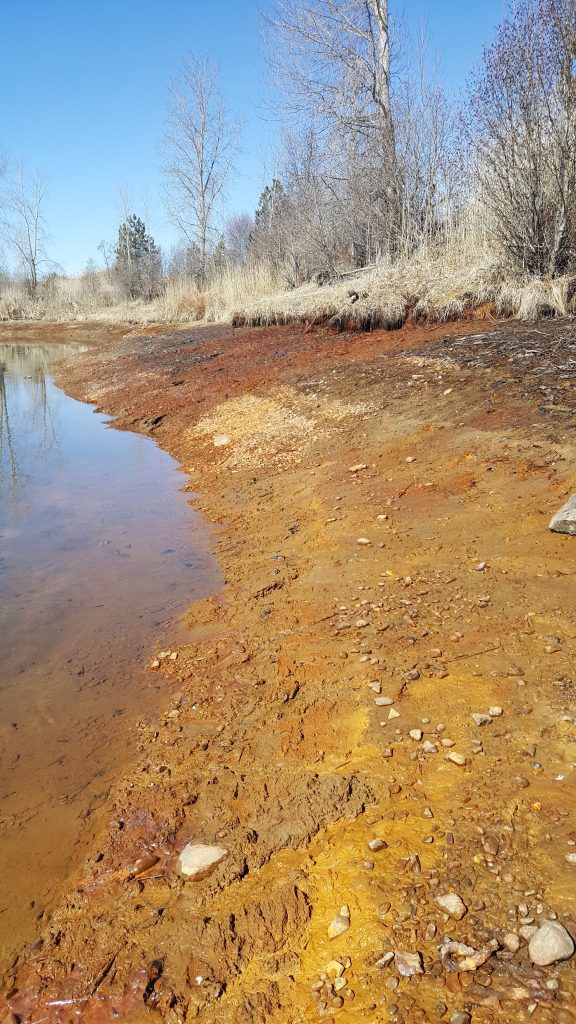
During the summer of 1933, Dr. Ellis and a team of scientists from the U.S. Bureau of Fisheries launched one of the first systematic investigations into the effects of mine waste on the Coeur d’Alene River system. Their work sought to understand how decades of mining activity had altered the watershed’s chemistry and biology.
The study began with a review of historic and contemporary mining and milling practices, followed by an inventory of aquatic species and a chemical analysis of mine wastewaters. From there, the team conducted laboratory and field experiments to determine how native aquatic organisms responded to contaminated water.
To assess real-world conditions, live dace minnows and long-nosed dace were placed in large wooden live-boxes. One box was stationed offshore of Harrison Beach in Lake Coeur d’Alene, where relatively clean lake water mixed with river water. A second was placed a quarter mile upstream in the Coeur d’Alene River, fully saturated with mine waste. After three days, the results were stark: fish in the lake remained alive and healthy, while all fish in the river box had died, their bodies coated in heavy mucous slime.
The researchers next examined plankton, microscopic crustaceans that form the base of aquatic food webs. Water samples were collected from four locations: the river mouth at Harrison, a quarter mile upstream from Harrison, the river at Dudley, and clean water from Canyon Creek above the mining district. Each sample was settled and maintained at the same temperature in the laboratory, with tap water used as a control.
Plankton exposed to water from a quarter mile upstream died within 18 hours; those in Dudley water survived no more than 36 hours. Approximately 80 percent of plankton in mixed water from the river mouth died within 48 to 72 hours. No deaths occurred in the clean Canyon Creek or tap water samples during the 14-day experiment.
These findings confirmed what fishermen and riverside communities had long suspected: polluted reaches of the Coeur d’Alene River were acutely toxic, capable of wiping out both fish and the microscopic life that sustained the entire aquatic food web.
To pinpoint the cause, Ellis and his team isolated individual components of the waste stream and tested their effects on frogs, turtles, catfish, bass, goldfish, and plankton. Materials examined included milling chemicals, isolated lead and zinc ores, and hard mineral build up that formed on mine tailings exposed along riverbanks and floodplains.
Milling chemicals showed variable toxicity, with the strongest effects occurring near mill discharge points. As these chemicals traveled downstream, dilution from cleaner tributaries reduced their potency. While dangerous near their source, the scientists concluded that milling chemicals alone could not explain the widespread biological collapse observed miles downstream.
Testing of isolated ores revealed clearer patterns. Plankton exposed to lead ore died within 48 hours, while fish survived longer but secreted heavy mucous until lead particles settled out of suspension. Zinc ore, by contrast, produced no deaths and no visible distress.
Yet these results only deepened the mystery. If milling chemicals weakened with distance and raw ores failed to explain the river-wide devastation, what was causing such severe and persistent toxicity throughout the watershed?
That question led Ellis and his team to focus on a far more dangerous culprit—one formed not in mills or tunnels, but along the riverbanks themselves. Stayed tuned for the final installment of the Ellis Report findings.
THE DIRT: Part II of Historic Pollution Study of the Coeur d’Alene River Basin
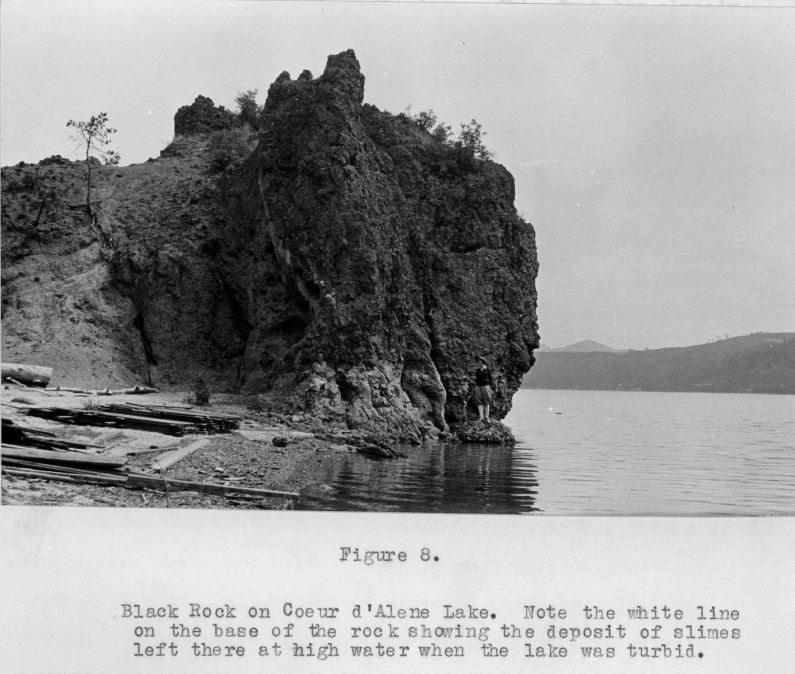
After mounting local and political pressure, the Idaho state legislature authorized a study of the pollution problems created by Silver Valley mines directly discharging waste into area waterbodies. The Coeur d’Alene River and Lake Commission was created to direct the study, and the commission requested the assistance of the United States Bureau of Fisheries who authorized a survey and a team of four fisheries scientists to investigate the issue. The study was to be conducted during the summer months of 1932, with results reported back to the Idaho State Legislature in 1933. Commissioner Cathcart, as the acting Secretary of the Coeur d’Alene River and Lake Commission, began preparing for the Bureau’s research team in the spring of 1932. Cathcart had a fully functional field laboratory constructed inside a boat house in Harrison; he also secured a small boat and vehicle for the team’s day trips and hired a local man familiar with area waterways to guide them. The team, led by Dr. M.M. Ellis, arrived in Harrison on July 9th, and started work the next day.
Ellis and his crew began by surveying the river system and learning about the disposal practices of the mines. He learned that for the first forty years of operation the mills in the district used the jig table method to process their ores. This method was quite inefficient and considerable quantities of lead and zinc ore were lost with these tailings as they were dumped in the river. The jig method produced larger rock particles and a finer rock powder. Due to their larger size and heavier weight, the jig tailings did not travel as far and completely settled out by the time they reached the Mission Flats in Cataldo where the river widened slightly and created a natural sedimentation area. Ellis noted that the entire Mission Flats area, consisting of several thousand acres, was now entirely covered with mining tailings and slimes that had settled out there. He interviewed several steamboat captains in the area who told him 15 to 20 years ago they could drive their steamboats and tugboats to the Old Mission, but the channel and the mainstream became so obstructed by large bars of mine waste and tailings that this could no longer be done. Inundated with so much waste, the river continued to carry enormous amounts of finer tailings into the Lower Basin miles downstream and into Lake Coeur d’Alene.
By the early 1920s all the mills in the district had converted to a much more efficient selective floatation method. While metal recovery rates improved, the floatation method created new issues. First, the ore bearing rock was reduced in ball mills to a tailings powder much finer than the powder formerly created from the jig tables. When mixed with water these tailings became slimy in texture and were called mine slimes by locals. Because of their small particle size, these new tailings did not readily settle out and were carried farther by the river and were also more susceptible to chemical changes. The floatation method also allowed for ore of much lower grade to be profitably handled, which increased mining efforts and thus increased the amount of waste in general. Lastly, the floatation process required the use of chemicals for separation and float substances that promoted bubbling and frothing, all of which presented new pollution problems.
Next, the science team began taking inventory of living organisms throughout the watershed, including the mine impacted sections of the river, Coeur d’Alene Lake, and the nearby Chain Lakes. They also assessed streams and waterbodies within the basin which were not impacted by mining activities. They collected data on fish fauna, bottom species, plant life, and the microscopic phytoplankton and zooplankton which are necessary to sustain fish populations. The primary focus was to assess numbers and types of fauna present in the contaminated waters and compare those to nearby streams and lakes not impacted by the mine waste. No fish or plankton were found in the portions of the river actively carrying mine waste and it was practically devoid of all aquatic animal life. In contrast the nearby unimpacted side streams and sections above the mining district were found to be thriving with aquatic life. In areas where the mine waters mixed with clean water sources, such as the chain lakes of the Lower Basin, species counts also dropped considerably, with no life in the heavily mixed areas, and increasing life as the water became more diluted. It was clear that these waste materials were taking a toll on the Coeur d’Alene River ecosystem, so now the scientist attempted to find out why.
The sheer number of tailings moving through the river system was enough to be deadly to aquatic species, but the chemical make-up of these sediments also played a significant role. The ore deposits in the Coeur d’Alene district are primarily sulfides but when exposed to air, sunlight, and moisture these metals begin changing chemically into sulphates and oxides, making them even more toxic. Area farmers explained that the tailings deposited on their farms and left along the shores of the river after high water events produced toxic, crystalline substances that killed crops and stock, particularly horses, and to some extent cattle, dogs, and chickens. In addition to studying the tailings themselves, chemical analyses of other conditions that impact fish life were completed including measuring dissolved gases, pH levels, and specific conductance of the mine impacted waters versus non-impacted waters. It was determined that mine waste had not greatly disturbed the balance of dissolved gases, relative acidity, or specific conductance, so the absence of aquatic life could not be ascribed to these conditions but rather to the contents of the waste itself.
Check back for Part 3 to see what the scientist found.
THE DIRT: Historic Pollution Study of the Coeur d’Alene Basin
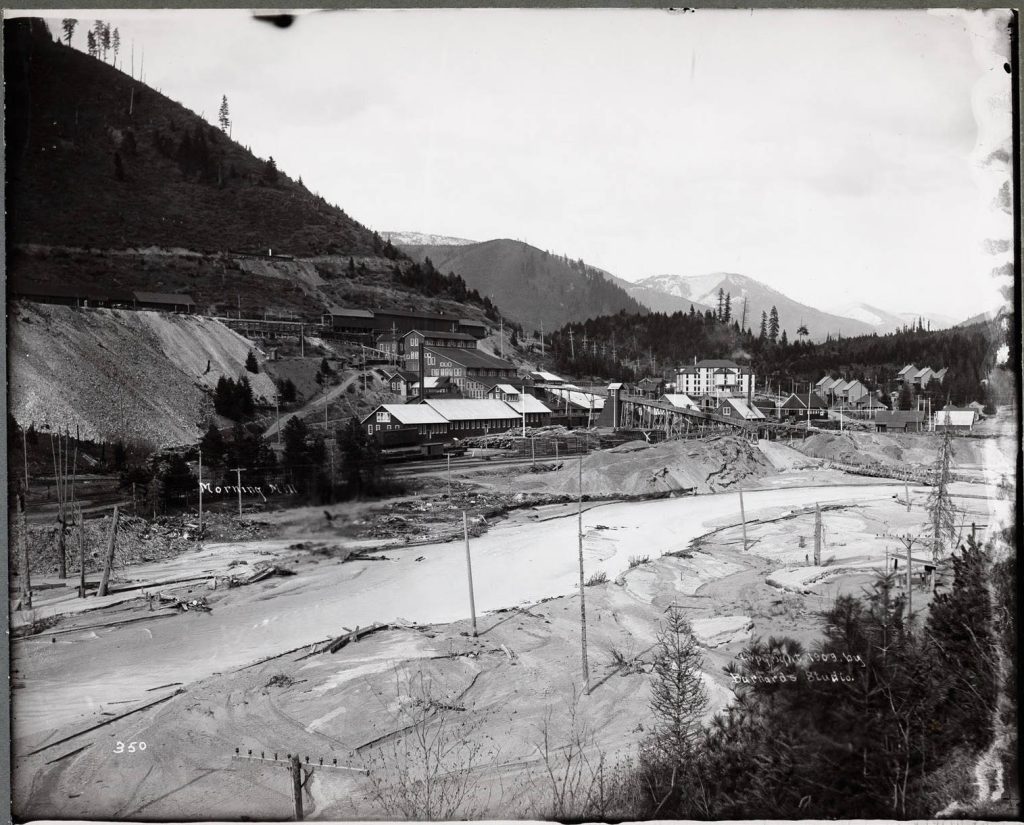
Today, the waters of the South Fork and the main Coeur d’Alene Rivers run clear as they meander across the lush landscape of the Idaho Panhandle, but in the not-so-distant past those waters ran cloudy gray with the discarded tailings and byproducts of mining in the Silver Valley. As one of the most productive mining regions in the country, the Coeur d’Alene District produced record amounts of lead, zinc, and silver ore, but also created vast quantities of waste. Most mine sites were in the deep, narrow gulches of the mountains, making waste storage and disposal difficult. With limited space and minimal flat ground, it became common practice to dispose of the waste rock and mill tailings directly into nearby creeks, which washed much of the waste away. Smaller creeks carried waste to the South Fork, where materials settled and continued to travel downstream, billowing out into the main Coeur d’Alene River channel. Waste began building up and collecting along riverbanks and the bottom of the river, creating sizeable deposits and manmade sandbars down its length. While common and legally permitted, disposing of waste into area water bodies was not welcomed by all, especially those living downstream in the region known as the Lower Basin. An area of rich fertile land, the Lower Basin had been homesteaded by ranchers and farmers to grow crops, rear livestock, and raise their families. These early settlers began seeing dramatic changes to the landscape as mining waste began to infiltrate the area.
Waste material from area mines first reached Lower Basin farms and communities as visible pollution in the 1890s. By 1900 the farmers began to complain that these sediments were causing illness and poisoning crops and livestock. In 1904, sixty-five Kootenai County farmers filed suit against several mining companies seeking more than $1.2 million in damages. In a separate action, they sought a permanent injunction against waste discharged into the river by these companies. The mining companies, represented by the Mine Owners Association (MOA), successfully defended the preferential status of miners’ water rights in the mining district, claiming that the waste was harmless, and offered the economic importance of mining as a justification for their dumping policies. The damage suit ended two years later when the jury was directed to award the farmers one dollar, a far cry from the $1.2 million they originally sought. In anticipation of additional cases, the MOA started a program to indemnify all property owners along the South Fork and the main Coeur d’Alene River against possible future damages. The MOA shared the cost of purchasing overflow and pollution easements, which released companies from all past and future pollution claims.
In 1929, Harrison banker and Kootenai County Commissioner E. O. Cathcart took John Knox Coe, the city editor of the Coeur d’Alene Press, on a boat tour of the Lower Basin to show him the devasted waterways, landscapes, and abandoned farms dotting the banks of the river. After seeing the damage firsthand, Coe began a new campaign effort to abolish the practice of direct discharge disposal in the Silver Valley. Coe published an eight-part series in the Coeur d’Alene Press called “The Valley of Desolation”, documenting the conditions of the Lower Basin and telling stories of ranchers and farmers whose lives were left in ruin following the destruction of their crops and livestock by mine waste. Coe solicited support for his campaign from local civic and outdoor groups as well as local politicians, including Congressmen Burton L. French of the First Idaho District. By March of 1931, this extra attention and mounting political pressure led the state legislature to authorize and finance a study by the Idaho Pollution Commission.
Learn more about how this study influenced past and current cleanup efforts in the Coeur d’Alene Basin in part two of this series.
THE DIRT: Restoration work at historic Pine Creek mine sites
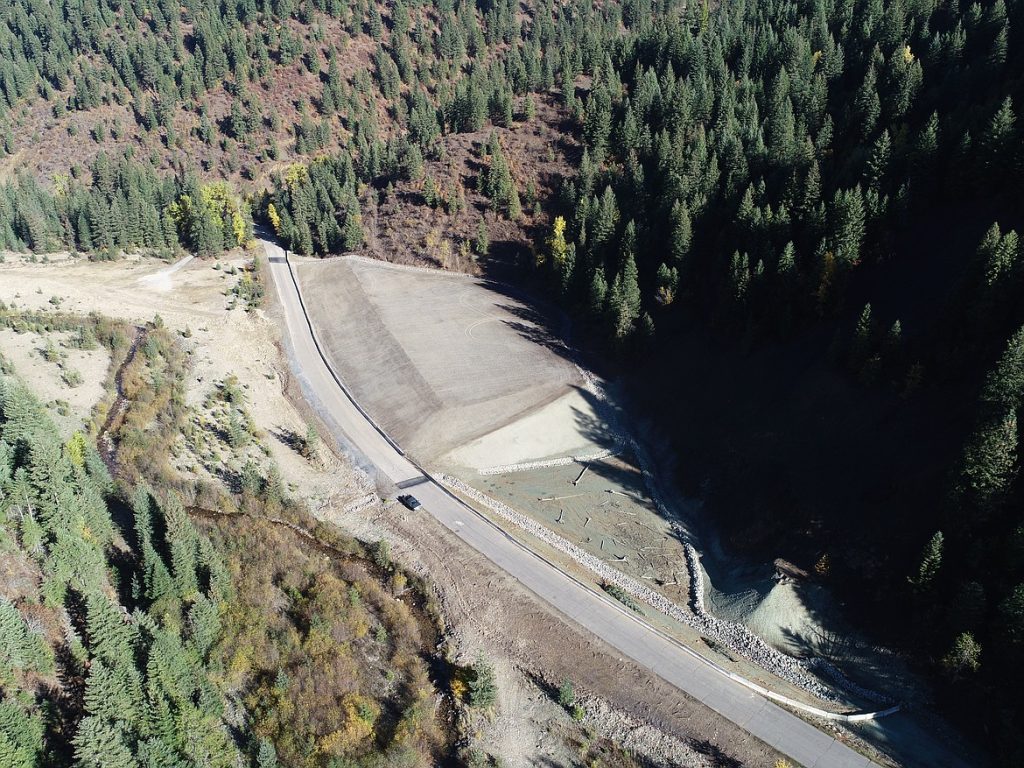
Abandoned mines and millsites throughout the Silver Valley are cherished by locals and visitors alike for their historic significance. These sites offer a glimpse into what daily life looked like for the hard-working men and women who ran these operations and developed the mining industry that shaped our local communities. As mentioned in part one of this series, the mines of Pine Creek, with their relatively short life spans, did not produce record-breaking amounts of ore, but they still have a vibrant and storied past that is full of interesting local history.
The Douglas Mine and Millsite is one of the more publicly visible sites within the Pine Creek District. It is located 6.4 miles south of Pinehurst, on the East Fork of Pine Creek, just north of the mouth of Douglas Creek. Ore was first discovered at the site in 1898, and by 1913, the Douglas Mining Company had patented ten claims comprising 144 acres. The Douglas Mine grappled with the same challenges that other Pine Creek mines faced with their zinc rich ore, which proved difficult to separate from the lead minerals. In 1924, the Douglas site fell victim to a devastating forest fire that destroyed surface operations, including cabins, supplies, and mining equipment. Though the company rebuilt within a year, in 1928, a forest fire once again leveled the mine’s surface workings. Not knowing that the Great Depression loomed, the mine rebuilt yet again, this time with a new hoist house, compressor building, timber shed, blacksmith shop, store, and several dwellings. As the Depression set in, metal prices dropped, causing the mine to cease operations in 1930. In 1943, mining commenced again when the company leased operations to the Small Leasing Company who built a new 100-ton flotation mill at the mine. Production surged during the Korean War but steadily declined afterward until the mine’s official closure in 1972.
While the Douglas Mine and mill site has sat vacant of its grand timbered buildings for decades, it still housed dangerous remnants of its past. Historic mining operations contaminated soils across the site with hazardous levels of metals, including lead, arsenic, and zinc, creating human health and environmental hazards. Vegetation struggled to grow in these contaminated materials, leaving a flat, open expanse that became popular for activities such as dirt biking, ATV riding, camping, and target shooting. These activities put people into direct contact with contaminated materials, creating human health and environmental hazards. As cleanup measures associated with the Bunker Hill Superfund Site wind down in residential areas, the Coeur d’Alene Trust is now addressing these kinds of mine and mill sites located in the more remote areas of the Silver Valley.
Sampling and the development of a site cleanup plan for the Douglas began in 2019. Cleanup activities kicked off in the spring of 2025 and wrapped up this fall. Approximately 26,000 cubic yards of mine waste were excavated from around the area and consolidated on site. This waste was then covered with a 14,700 square yard liner system, which was capped with three feet of clean cover materials. In addition, crews constructed 1,800 linear feet of storm water channel, installed two 24” culverts to convey storm water from the site, and built an adit conveyance system to capture seasonal flows from the adit. In total, approximately 14,100 cubic yards of clean backfill were installed across the site, and access controls were placed around the perimeter to protect the final remedy. Cleanup activities help transform sites so they no longer pose risks to human health or the environment. This work represents meaningful progress for the Silver Valley, and our community can proudly recognize the efforts being made to improve human health and the environment, which makes it a safer place for all to enjoy.
The Dirt is a series of informative articles focused on all aspects of cleanup efforts associated with the Bunker Hill Superfund Site. Our goal is to promote community awareness of contamination issues, to provide tools for protecting public health, and to keep the community informed of current and future cleanup projects. The Dirt is a group of committed and local experts from multiple agencies, including the Basin Environmental Improvement Project Commission, Panhandle Health District, Shoshone County, Silver Valley Economic Development Corporation, and the Idaho Department of Environmental Quality.
THE DIRT: History of mining in Pine Creek
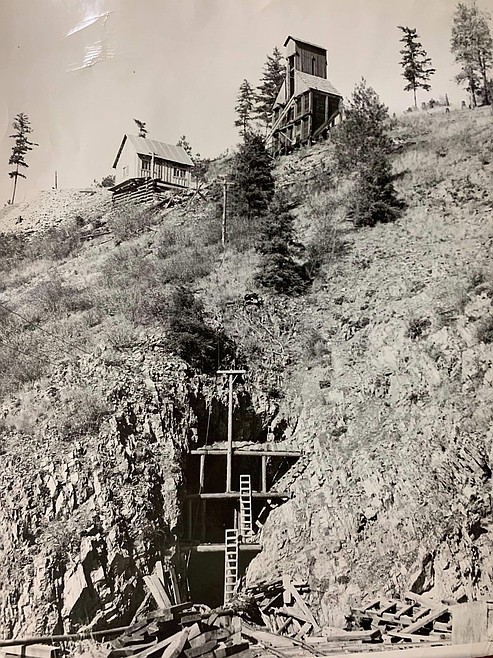
While not as notable as Bunker Hill, Sunshine, or the Hecla Star, the mines of Pine Creek cannot go without proper recognition for their contributions to the Silver Valley. The Pine Creek Mining District, formerly known as the Yreka Mining District, is a smaller region within the larger Coeur d’Alene Mining District. Attributed to William Reineger in 1886, the discovery of Pine Creek’s lead-silver ore occurred two short years after its discovery in the larger district. Shortly after Reineger’s initial discovery, numerous other ore-rich areas were identified, and Pine Creek became home to over a dozen mines and several mills.
Mineral bodies in the Pine Creek region were composed of a complex mixture of zinc, lead, silver, and antimony ores that early milling and processing methods struggled with. In the early years of milling, there was little to no attempt made to recover zinc due to inadequate processing technology. As such, little mining occurred until the onset of World War I, when high metal prices and demand stimulated development and resulted in considerable production. The Pine Creek district faced multiple issues when attempting to install a rail line to transport ore. In 1917, after several miles of track were completed, a washout severely damaged portions, and the work was discontinued. This inability to complete a branch line in the district slowed production after the war.
Direct discharge disposal practices, legally used throughout the larger district, were also implemented in Pine Creek. Massive quantities of tailings were discarded throughout the drainage during this time. With only inefficient recovery methods available, this disposal practice introduced metal-laden waste products into Pine Creek and its tributaries. These sediments contained lead and other metals that were hazardous to humans, the environment, and aquatic species such as cutthroat and bull trout. These activities also increased the sediment loading within the creek bed and widened the stream channel in many stretches.
With the invention of the selective flotation concentration method in the 1920s, metal recovery rates greatly improved. This allowed mills to easily separate individual metals, creating a new market for zinc. The Sullivan Mining Company, owned by Hecla and Bunker Hill, constructed the very first electrolytic zinc plant in the United States to capitalize on this new process. The new zinc plant was constructed in Government Gulch just south of Bunker Hill’s lead smelter. Bunker Hill also remodeled its Sweeny Mill to handle custom ores from the Pine Creek mines. A 3.5-mile tramway was constructed to transport Pine Creek ores. This tramway ran from the Sidney Mine, located at the head of Red Cloud Creek, northeast over the mountain to the Sweeny Mill at the bottom of Government Gulch.
Higher efficiency recovery rates and the construction of the zinc plant contributed to a period of sustained mining activity between 1924 and 1930. Unfortunately, the mines were not immune to the ill effects of the Great Depression, which led to reduced operations or the complete shuttering of many mines. Recovery took time, but the passage of the federal Silver Purchase Act in 1934 encouraged mines that produced silver to reopen. At the end of the decade, rumors of war boosted metal prices even more, and local mills began processing ore that had been stockpiled during the depression.
With the onset of World War II, the demand for lead, zinc, and antimony grew, but many mine and mill workers joined the armed services, thereby creating a labor shortage across the industry. As a result, production from the Pine Creek mines never again reached the levels they had during World War I. In the 1950s, new federal programs instituted by the Department of the Interior encouraged exploration, development, and mining, benefiting many area mines, but these programs were short lived. By the end of the 1960s, a combination of factors, including declining metal prices, higher operating costs, and dwindling reserves, led to the permanent closure of most of the Pine Creek mines and mills. Smaller operations and exploration work continued into the 1980s, but by this period in time the mining rush of Pine Creek was all but over.
The Dirt is a series of informative articles focused on all aspects of cleanup efforts associated with the Bunker Hill Superfund Site. Our goal is to promote community awareness of contamination issues, to provide tools for protecting public health, and to keep the community informed of current and future cleanup projects. The Dirt is a group of committed and local experts from multiple agencies, including the Basin Environmental Improvement Project Commission, Panhandle Health District, Shoshone County, Silver Valley Economic Development Corporation, and the Idaho Department of Environmental Quality.
THE DIRT: Canyon Creek’s path to cleanup

Significant progress has been made in Canyon Creek over the past several years, with multiple major remediation projects recently completed or underway. These efforts are aimed at removing contaminated material, remediating and reconstructing stream channels to provide a clean habitat. Work in Canyon Creek has been prioritized to reduce risk for residents living in close proximity to mine-impacted materials with high concentration of metals such as lead.
Cleanup began at the Star Project in 2023 and is well into its three-year construction plan. In 2025 alone, crews excavated roughly 48,000 cubic yards (CY) of waste material, which is about 4,800 dump truck loads moving 10 CY per load. To reclaim the area, approximately 47,000 CY of clean fill and vegetative cover soils will be placed back into the site. In addition, about 800 linear feet (LF) of stream will be reconstructed this year. Over the project’s duration, waste excavation will total around 150,000 CY, with nearly 2,800 LF of stream reconstruction completed.
Another major effort, the Tamarack No. 7 Project, has a cleanup scheduled from 2025 to 2026. Work in 2025 included excavation of approximately 109,000 CY of waste and the remediation of about 1,900 LF of stream channel. By project completion in 2026, it is projected that about 165,000 CY of waste will be removed and 3,100 LF of stream restored.
Earlier efforts laid important groundwork for this recent progress. From 2019 through 2022, the SVNRT Remediation Project successfully removed nearly 600,000 CY of waste material. While no direct stream remediation was conducted under this project, it moved mine waste into an appropriately constructed repository and added substantial disposal capacity for future cleanup work. The Canyon Complex Repository (CCR) now provides about 1.8 million CY of total capacity to support ongoing and upcoming cleanup activities.
Looking forward, several additional projects are planned to maintain momentum. These include work on the Flynn Mine/Black Bear Fraction, Canyon Creek Garbage Dump, Standard Mammoth Reach, Frisco Reach, Gem Complex, Lower Canyon Creek Riparian Area, and the Standard Mammoth Millsite. These sites stretch from just above the Star to the bottom of Canyon Creek.
Overall, these projects represent a significant investment in the health and resilience of Canyon Creek. The pace of work achieved over the last few years is expected to continue in the coming years. These projects strengthen Canyon Creek’s health and resilience and will continue driving measurable environmental progress in the area.
The Dirt is a series of informative articles focused on all aspects of cleanup efforts associated with the Bunker Hill Superfund Site. Our goal is to promote community awareness of contamination issues, to provide tools for protecting public health, and to keep the community informed of current and future cleanup projects. The Dirt is a group of committed and local experts from multiple agencies, including the Basin Environmental Improvement Project Commission, Panhandle Health District, Shoshone County, Silver Valley Economic Development Corporation, and the Idaho Department of Environmental Quality.
THE DIRT: The history of roads in the Silver Valley Pt. 2
As noted in part one of this series, the Silver Valley’s mining legacy runs deeper than its mountains—it is built right into the roads beneath our feet. For decades, mine waste was routinely used to build and maintain local roadways, rights-of-way, and driveways. Though this practice is long behind us, its impact can still surface today, especially for the road crews, utility workers, and contractors who continue to work in these areas.
Due to the widespread depth and distribution of contamination throughout the Bunker Hill Superfund site, complete removal of these waste materials was not economically feasible, nor logistically possible. As such, only partial removals of contaminated materials could be completed. Remediation depths vary, but most clean barriers will be either 6 or 12 inches deep, creating a clean protective layer over the remaining contaminated waste.
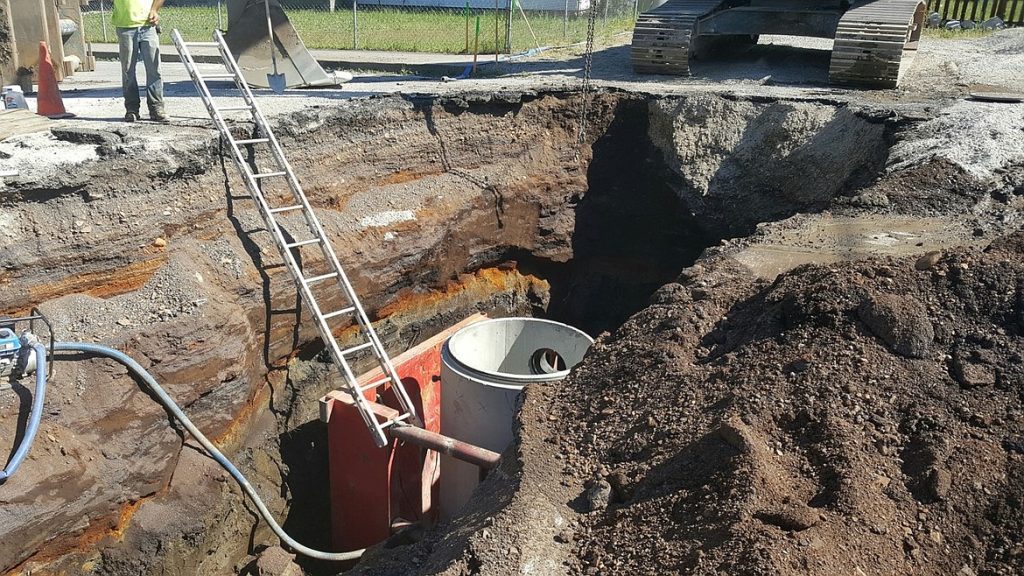
Roadbeds and rights-of-way are common places to run underground utilities such as fiber, gas, water, and sewer. This means most of the utility lines found within or adjacent to roadbeds throughout the Silver Valley were placed in contaminated materials. When utility, roadway, or ditch maintenance is needed, our local contractors are faced with the task of performing necessary repairs while also maintaining and restoring any remediated barriers they may encounter. This can be a big challenge, taking more time and effort than working in unremediated areas. To ensure this work is done properly and safely, contractors are encouraged to take the ICP class before working within the Superfund site.
Crews must protect remediated barriers by excavating and separating the clean barrier materials, then separating and isolating any of the deeper contaminated materials. Mishandling of contaminated materials during excavation can result in recontamination of clean areas and expose children and those near construction sites to lead and other metal contaminants. The responsible handling and disposal of these materials ensures that public health and the safety of the surrounding environment are protected. When all work is complete, contractors must ensure that the remediated barriers are restored to their original condition. While this process adds a layer of complexity to their everyday tasks, our local construction crews have mastered the methods needed to complete their work while protecting the remediation barriers that prevent accidental exposure to the contaminants that remain in our area. We thank them for their hard work and continued efforts to work safely and protect us all!
The Dirt is a series of informative articles focused on all aspects of cleanup efforts associated with the Bunker Hill Superfund Site. Our goal is to promote community awareness of contamination issues, to provide tools for protecting public health, and to keep the community informed of current and future cleanup projects. The Dirt is a group of committed and local experts from multiple agencies, including the Basin Environmental Improvement Project Commission, Panhandle Health District, Shoshone County, Silver Valley Economic Development Corporation, and the Idaho Department of Environmental Quality.
Related Articles
THE DIRT: How Flooding in the Bunker Hill Superfund Site is Different
Read Full Article