For many years, students from Kellogg and Wallace High Schools have participated in the Confluence Project, a year-long water science program that connects classroom learning with real-world environmental research. Sponsored by the University of Idaho and supported by numerous agencies and local governments, the program provides students with hands-on opportunities to explore the Coeur d’Alene Basin watershed and the challenges facing its natural resources.
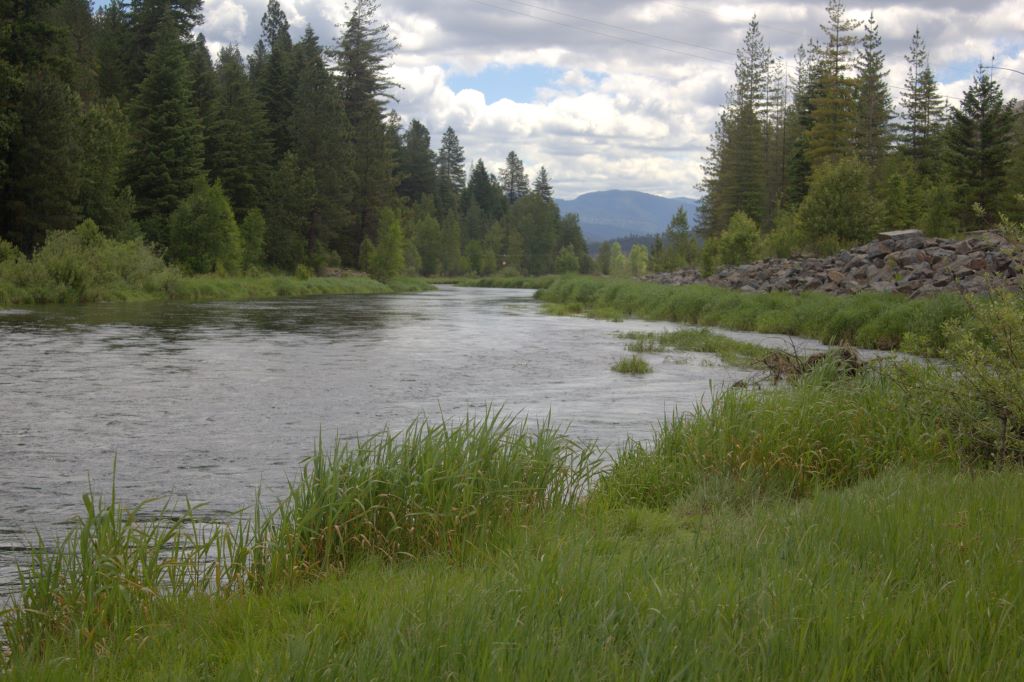
Each fall, students head into the field to investigate local waterways and assess stream health through chemical, physical, and biological monitoring. Kellogg students study Jackass Creek, while Wallace students conduct research on the South Fork Coeur d’Alene River. Both waterways have been affected by historic mining contamination and continue to face environmental pressures, including rising water temperatures and changing stream conditions.
Through these field studies, students collect and analyze data to better understand the health of aquatic ecosystems and the species that depend on them. Along the way, they learn about the history of the watershed, the impacts of human activities, and the importance of protecting water resources for future generations.
Another highlight of the program is snowpack monitoring. Students go to Lookout Pass during the winter to measure snow levels and learn how mountain snowpack functions as a natural water reservoir. They discover how snowmelt sustains rivers and streams throughout the spring and summer, and how declining snowpack can reduce stream flows, increase water temperatures, and create challenging conditions for fish and wildlife.
The lessons learned through the Confluence Project often stay with students long after they leave the classroom. During a field excursion last fall, a former participant joined the group and immediately noticed that water levels in the creek were significantly lower than in previous years. The observation demonstrated not only an enduring connection to the watershed but also one of the most important skills in science: careful observation.
The program’s impact extends far beyond data collection. Students are encouraged to connect their own interests and passions with science and environmental stewardship. Many finish the year with greater confidence in their abilities and a new appreciation for careers in science, natural resources, and environmental management.
Wallace High School teacher Jennifer Murray has seen firsthand how the program engages students.
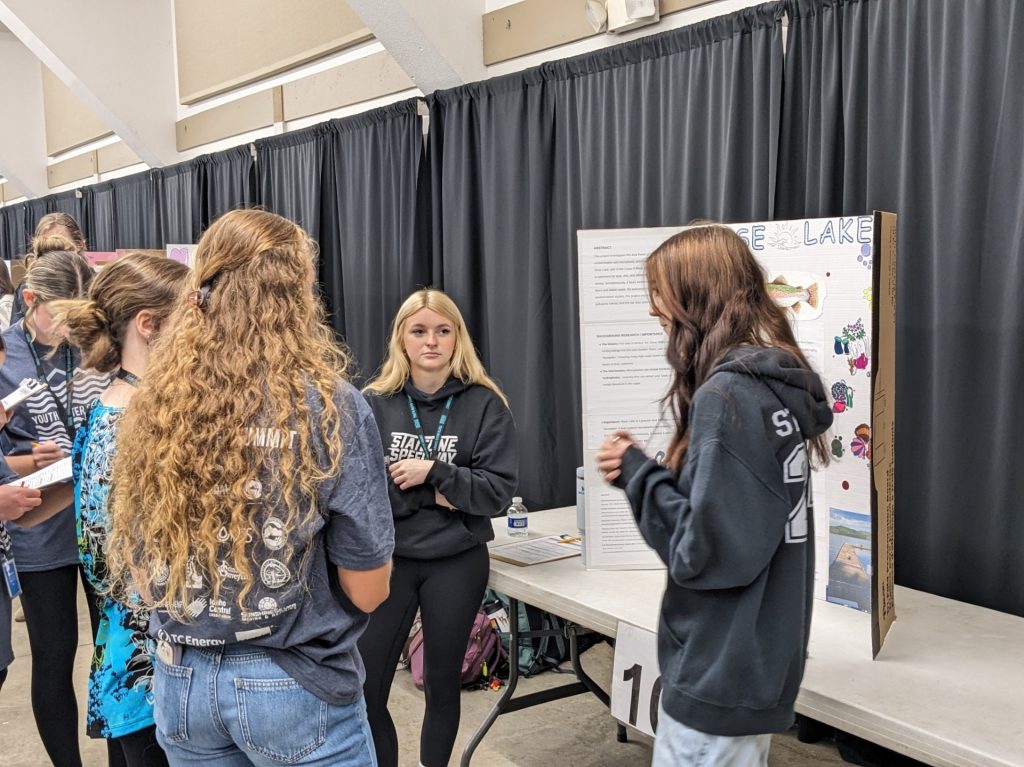
“We first learn about rivers and how to measure water quality and assess the health of a river. Students enjoy walking to the river to do this hands-on assessment. In February, we go to Lookout to measure snowpack and compare our data to the SNOTEL records to see how snow levels have changed over the past 70 years. Students then choose a topic related to the Coeur d’Alene Watershed to investigate and present at the Youth Water Summit. It’s a great opportunity for students to learn alongside other schools and science professionals while developing a deeper understanding of their watershed.”
2025 Youth Water Summit Award Winners
Kellogg High School
- First Place: Isabella Hollis and Nevaeh Schabell
- How does oil pollution affect the aquatic environment?
- Second Place: Richard Bewick, Gabe Johnson, and Darren Ruggabe
- Third Place: Abie Torres and McKayla Sims
- Overall Effects of Lead Pollution at Bull Run Lake
Wallace High School
- First Place: Ashley Schwartz and Kora Foust
- Rose Lake, Dual Threats from Metals and Microplastics
- Second Place: Anthony Frank
- Human Waste in the Waters…
- Third Place: Henry Larson and Marley Pearce
Through programs like the Confluence Project, local students are gaining the knowledge, skills, and experiences needed to become the next generation of watershed stewards and community leaders.
The Dirt is a series of informative articles focused on all aspects of cleanup efforts associated with the Bunker Hill Superfund Site. Our goal is to promote community awareness of contamination issues, to provide tools for protecting public health, and to keep the community informed of current and future cleanup projects. The Dirt is a group of committed and local experts from multiple agencies including the Basin Environmental Improvement Project Commission, Panhandle Health District, Shoshone County, Silver Valley Economic Development Corporation, and the Idaho Department of Environmental Quality.
 Official Government Website