

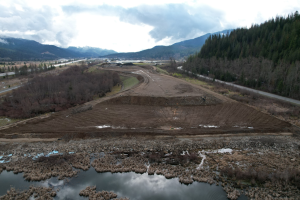
THE DIRT: The Page Repository Pt. 1 – New life for the 34-year-old facility
If you've driven past the Page Repository recently, you've probably noticed a large stockpile of concrete and wondered what's going on. Why is so much concrete being brought to the repository? Why is it being placed in what appears to be a wetland? And how does it fit into the environmental cleanup of the Coeur d'Alene Basin?The answer starts with...
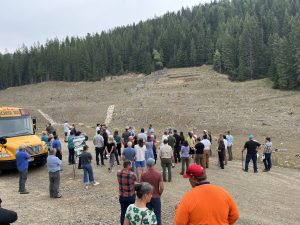
THE DIRT: Annual Basin tour to explore lower regions
Join the Basin Environmental Improvement Project Commission (BEIPC) for its annual Basin Tour on Wednesday, July 29, from 9:30 a.m. to 3:30 p.m. This year's tour will focus on the Lower Basin, highlighting both remediation and restoration efforts that are improving water quality, habitat, and ecosystem health throughout the watershed.The annual tour gives commissioners and members of the public an...

THE DIRT: The Confluence Project in the Silver Valley
For many years, students from Kellogg and Wallace High Schools have participated in the Confluence Project, a year-long water science program that connects classroom learning with real-world environmental research. Sponsored by the University of Idaho and supported by numerous agencies and local governments, the program provides students with hands-on opportunities to explore the Coeur d'Alene Basin watershed and the challenges...
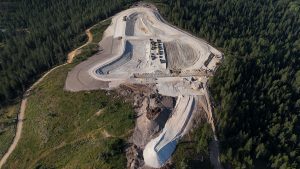
THE DIRT: Innovative Wastewater Project in Kingston-Cataldo Blends Infrastructure Upgrades with Environmental Benefits
KINGSTON, ID — The Kingston-Cataldo Sewer District is redefining what infrastructure can achieve. By pivoting to an innovative land application treatment approach, the District is securing future capacity and self-sustainability while cultivating a thriving local ecosystem.Faced with current user rates averaging $72 per month per housing unit, the district began exploring alternative treatment methods to control future costs while maintaining effective...
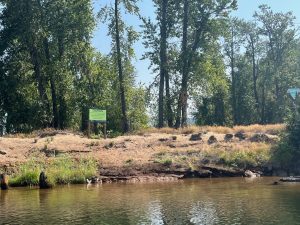
THE DIRT: Drought conditions increase exposure risks
Winter in North Idaho has been an odd one this year. From December flooding to an unseasonably dry & warm February, to several severe windstorms, North Idaho has certainly been through the ringer. Precipitation and snowpack deficits over the past four years have also contributed to a multi-year drought in our region that persists today.Despite late-season snowfall, snowpack remained below...
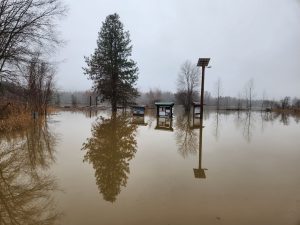
THE DIRT: From Flood to Drought: Why North Idaho Is Still Short on Water
To many people, December’s flooding may have looked like the end of North Idaho’s drought. In reality, the region’s water picture remains fragile—and in some ways, the flood masked deeper problems.North Idaho has experienced some level of drought since the summer of 2021. While only water year 2024 saw well-below-normal snowpack overall, most recent years have been marked by earlier-than-normal...
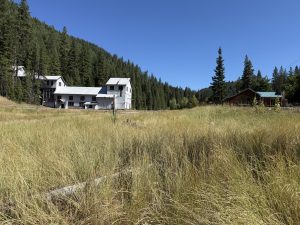
THE DIRT: Dayrock Mitigation
The Dayrock Complex is located near Wallace within Ninemile Creek Basin watershed and is included in the Upper Basin of the Bunker Hill Mining and Metallurgical Superfund site. This site offers a real-world example of how the National Historic Preservation Act (NHPA) guides decisions and mitigation when cleanup efforts affect historic resources. During the Historic Resource Survey, 18 historic-period architectural...
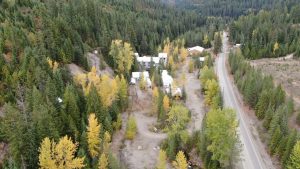
THE DIRT: The National Historic Preservation Act
The Silver Valley has a rich history dominated by silver, lead, and zinc mining, which began in the late 1870s and established the region as the world's largest silver producer by the early 1900s. Visitors come to explore this past, touring local museums to learn about mining practices as well as visit old mining structures that are peppered throughout the...
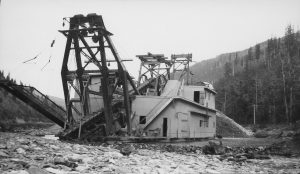
THE DIRT: Prichard Creek Restoration
Written by guest author: Cathy Gidley, North Idaho Program Manager for Trout UnlimitedIn 1879, AJ Prichard discovered gold in Prichard Creek, setting off the mining rush in the Coeur d’Alene basin. Prichard Creek is a tributary to the North Fork Coeur d’Alene River and was the site of several hard rock mines and mill sites in the 1900s. Placer and...
THE DIRT: How Flooding in the Bunker Hill Superfund Site is Different
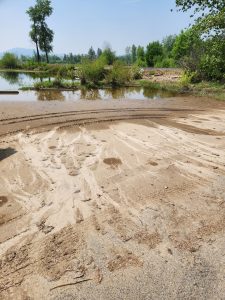
While flooding in North Idaho is not uncommon, high flow events like the one that occurred in December 2025 can have consequences that extend beyond immediate water damage. When high flows sweep through the Coeur d’Alene River Basin, they interact with a landscape shaped by more than a century of mining activity. Historic discharges mean that floodwaters have the potential...